HYDRATION.
I’m sure you all have heard how our bodies can survive weeks without food but only days without water. It’s 3 to 4 days to be in the ballpark, maybe maximum a week.
You’ve also probably heard that 60% or more of our body is made of water… We are sort of like walking water balloons if you think about it… Every single cell in our body is made of water. It’s between our joints, it’s in our brain, it carries toxins out of our systems… so why is it that we don’t get enough of it?
We get so busy go go going that we forget to take a few sips here and there and then before we know it we have a headache and feel famished. Most of the time we blame it on other things likes stress or a hard workout.
Hey, maybe it is from those things… but maybe you haven’t been hydrating as well as you should be.
The reason I am making this baby step number one is because hydration, above all else, is MOST IMPORTANT.
Now I know some of you probably do drink enough, but some of you don’t and some of you think you do but don’t realize that going 3 – 4 hours in between drinking water is too long. And drinking copious amounts at a time is like overfilling a gas tank in your car – it’s a waste.
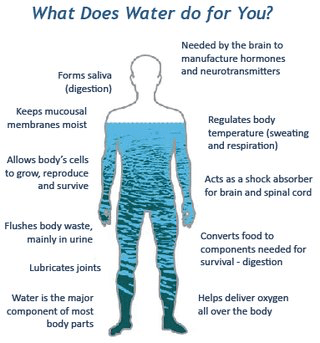 A few of the things water does in our body…
Even if your diet is “right” – you could still be at a plateau because of how often you are dehydrated.
This isn’t a “I’ll gulp a ton of water down this morning and worry about it again this afternoon” thing. This is a “I’ll stay hydrated every hour to ensure my body is functioning the way it needs to” thing.
Staying hydrated does many things for us and has promising research to show it improves us in these areas:
- Sports/physical performance
- The most well documented of all the effects hydration has on us are in sports and physical performance
- We see a decline in performance at as little as 1 – 2% loss of our body weight from fluids.
- One issue with sports/physical exertion is that we don’t get enough fluids according to our thirst.. have you ever felt that you drank a ton of water during and after a workout but still hours later got a headache?
- Cognitive function and mood
- Mild dehydration produces alterations in a number of important aspects of cognitive function such as concentration, alertness and short-term memory in all ages.
- As with physical functioning, mild to moderate levels of dehydration can impair performance on tasks such as short-term memory, perceptual discrimination, arithmetic ability, visuomotor tracking, and psychomotor skills.
- Delirium – especially in the elderly and ill
- As we age we actually lose our thirst sensation and many times this contributes to dementia in the very elderly population
- GI function
- In case you were wondering – you can absorb up to 15 L/day in the small intestine and 5 L/day in the colon
- Gastric emptying is increased by the more water we drink
- So if you feel you don’t poo enough… drink more water
- Kidney function
- The kidneys are the real detoxers here. Without proper water intake they cannot get rid of toxins as well and dehydration can cause injuries to the kidneys (think of a car running without gas)
- Protective against or prevents kidneys stones
- Helps prevent UTIs
- Heart function
- Can help prevent syncope and hypotension
- Has even been shown to have good effects on hypertensive patients
- Chronic headaches
- Still largely unexplored but with good evidence – there is a link between dehydration and a trigger for migraines.
- It may not be a cure or a chronic headaches but it has proven to lessen the severity of the symptoms
- Skin
- The skin contains approximately 30% water, which contributes to plumpness, elasticity, and resiliency. The overlapping cellular structure of the stratum corneum and lipid content of the skin serves as “waterproofing” for the body (if you understood that you can take a good guess at what one of our steps focus on)
- Weight loss
- Not set in stone but it has been proven to keep hunger cues (or wrong ones) at bay.
- However, stronger evidence suggests that our most hydrated individuals are over weight… why??? Because of what they’re choosing to hydrate with… So that’s a big focus here… keep reading.
Even without all these facts – feeling good and being hydrated is a real thing. And that’s what this is all about, feeling your best.
That’s why hydration is number one in our steps.
We want our body functioning properly for it to be able to reap all the benefits of everything else.
So our rules:
- Drink 16 – 24 ounces of water upon waking
- You wake up already dehydrated just from respiration (breathing) all night long. You know when you breathe on a window and it fogs… yea that’s water.
- BEFORE your coffee or tea.
- Coffee/tea is only a diuretic when ingesting over 500 mg of caffeine, HOWEVER, one cup of coffee brewed “correctly” at home is 100 mg (8 oz, you’d be surprised at how small this is in your huge coffee cup)
- One Starbucks Venti is 450
- Some of you may not be aware of how much you’re drinking, I know I drink a ton of coffee.
- Water is the only thing we are going to count as our “fluids” for the next three weeks
- This only means that there is a water goal, other fluids (besides alcohol) will most likely be hydrating you as well. That’s okay, but the goal here is to make sure you’ve created a water habit, not a juice one.
- I will post on other sources of fluids within this three week period, because it’s fun to know.
- Goals:
- Men: 15 – 16 cups a day
- Women: 11 – 12 cups a day
- More active individuals, heat, health and pregnancy all can increase these needs. Be aware
- Every one is different and needs are different, but this should cover the majority of you (if you’re a very tall person, you will need more, if you’re very small – you may find this is more than enough)
- If you workout pretty hard – don’t count the fluids you drink during your workouts towards this goal
- Please don’t go overboard – it is hard, but it is possible to drink too much water, you can literally drink yourself into drowning.
- Spread these out throughout the day – self explanatory but needs to be said, the body is constantly using and expelling, give it a steady supply of quality H20 to let it do its jobs properly. Every hour get about a cup in.
- I highly recommend buying water bottles, multiple. And keeping them all the places you loiter the most. I personally like ones with straws because I don’t like to be bothered with opening bottles and throwing it back. I keep one at both my desks at the clinics I cover, I keep one at home and I have one for the gym (that one opens up top) and even still I fall behind.
What not to drink or to avoid:
Yes we are focusing on water intake here, but if you read #9 about overweight individuals being the most hydrated people… well, we are going to keep you from that.
- No soda of any kind – no diet, no real, none.
- No alcohol – the only proven diuretic in any amount you drink it, the effects on the body are almost all negative.
- However, if you are going to drink, hydrate hydrate hydrate. Read here if you are doing the wine thing. Be SMART
- If you’ve recently heard about the glass a wine a night for weight loss – please read HERE
- Stay away from juice. If you want some -eat the real thing.
- No energy drink/gatorade/sports drinks – unless you happen to be going hard in the gym (think multiple hours) and/or it’s really really hot outside.
- Read the ingredients list
- Is it long? – don’t drink it
- Does it have added sugar? – don’t drink it
- Does it have sugar substitutes? – don’t drink it
If you drink a lot of these things – it is okay to “ween” off of them, especially if a lot of it is social. If this is an issue for some I will write a blog addressing this.
Okay to include:
- Milk or other dairy drinks
- Plant milks – please get ones without added sugars
- Coffee, tea (okay to add your own sugar or dairy to these – this will be addressed in a future step)
Please ask your questions either on this blog, the post you used to get here or the Facebook group (preferred)
Baby steps – nutrition lifestyle integration
Let’s get hydrating!


Wow Traci. Very well explained. Thank you.!
LikeLike