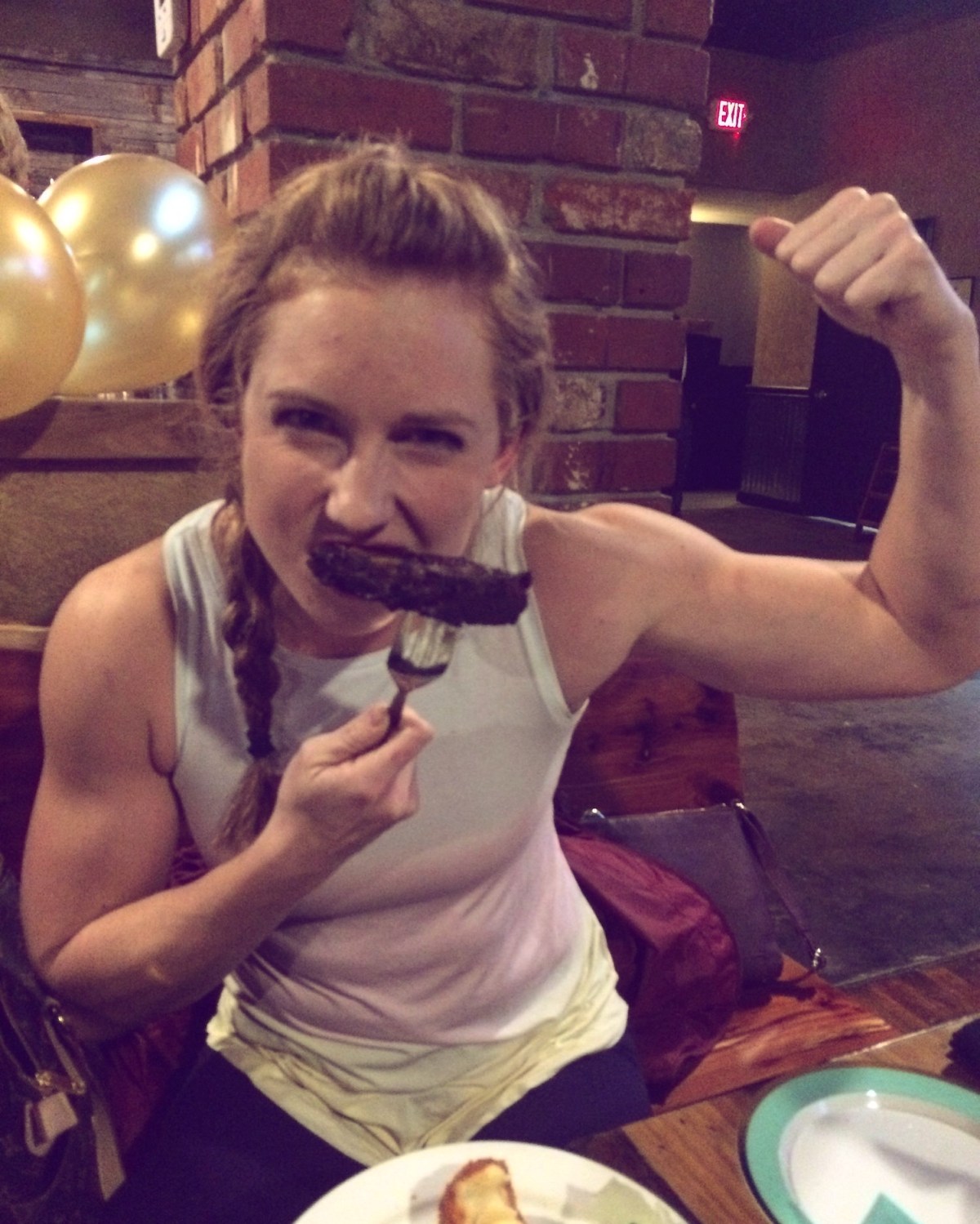
Quite possibly my favorite macronutrient.
The most overhyped and also underrated of the three. To start this, I’d like to get a few things out of the way.
NO, high protein intake will not kill your kidneys.. You’d have to eat copious, and I mean COPIOUS amounts for it to hurt them. Can you choke down a 72 ounce steak for every meal of every day?
Nevermind, don’t answer that.
NO, your spinach and broccoli do not contain all the protein you need in them, not even if you ate lbs more than the 72 oz steak. Neither does rice, or beans, or any other vegetable besides soy… and maybe quinoa.
And we all seem to hate soy.
Can I just remind you that life is everything in moderation? And that so many people talk bad about protein but don’t seem to mind alcohol – which has been PROVEN time and time again to hurt your body.
“No meat, let’s drink!”
I just made that up. But I like the way it rhymes.
I’ve spoken with diabetics holding a donut telling me they can’t eat much protein because their sisters ex-husband brothers boyfriends daughters doctor said it was bad for your kidneys.. Let’s be clear here. Diabetes is about a million times more likely to put you in a dialysis chair so you can see my smiling face every week just to tell you that you need to eat more protein.
I have yet to see a case from “Overconsumption of protein”
In case you didn’t know. I’m a renal dietitian during the day and work with patient’s who have little to no kidney function. They spend 4 hours three days a week strapped down in a chair while a machine cleans their blood for them. And its my job to educate them on their diet.
All day long they hear “PROTEIN PROTEIN PROTEIN”
So to get to the point. You need some protein in your diet. Not too much, not too little.
Why do you need protein?
Every single cell in your body uses proteins. They’re made up of amino acids and if you remember – amino acids are the building blocks of EVERYTHING. You will find proteins in skin, hair, cartilage and muscle cells that provide structure and protect the body.
Amino acids make up various protein hormones in the body including human growth hormone produced by the pituitary gland and insulin produced by the pancreas. Proteins that act as enzymes, hormones and antibodies. They catalyze, regulate and protect the chemical reactions in the body. Proteins also play a role in the transport of oxygen and other substances in the body by making hemoglobin, the protein in red blood cells; myoglobin, the protein in muscles; and lipoproteins that transport lipids like cholesterol and triglycerides.
So next time some voodoo doctor tells you that you need to take $500 worth of vitamins and minerals to correct your hormones and imbalances – come talk to me instead and we can see what we can do in your diet to make it right.
And I’d like to mention that as we age our metabolism slows down… you know what that is linked to? Muscle wasting. Which can helped be prevented with adequate protein intake and physical activity.
So this is what I want us to do
- I want everyone who eats meat to add high-biological value (HBV) proteins to every meal
What this means is to eat meat. If you don’t eat meat – that’s okay. Will get to that.
But the HBV protein means how well we absorb them – not all proteins are made the same.

So as you can see from the list, whole eggs > egg whites alone. Always. But you’ll also notice that not very many plants made the list above 50% value.
This means we absorb nearly 100% of the protein in a whole egg… but only 54% of the protein in wheat, and the wheat isn’t even a complete protein – meaning it is missing some essential amino acids that the body will use to create it’s own protein.
2. GOAL: 4 oz of meat at all meals for women and 6 oz of meat for men
In egg equivalent that is 3 eggs.
4 oz of meat is 20 grams of protein, three large eggs is 21 grams.
3. If you don’t eat meat 2 – 1/2 C servings of complementary proteins at each meal.
| Grains | Plant proteins |
| · Quinoa
· Chia seeds · Rice · Nuts (besides peanuts) · Seeds · Whole grain foods · Oats/barley/rye |
· Chickpeas
· Peas · Lentils and legumes · Beans · Peanuts and peanut butter |
So choose one from each side of the list.
This isn’t a complete list, but it is a start. The key is to remember that grains complement plants
Beans and rice, Quinoa and lentils, mixed nuts.
So a cup at each meal. And you may already be close to that if you’ve been staying on course with the baby steps program.
You also don’t have to get complimentary proteins at the same meal, we have something called the amino acid (or nitrogen) pool in our bodies. We don’t actually store any unused proteins, we have a pool floating around in use that is constantly being used and turned over.
So if you eat from only one side of the list at one meal, make sure you get the other side sometime throughout the day. The body will put them together regardless.
Non-vegetarians, use this list to your advantage. You should already be including a lot of these items in your meals, know that they can increase protein intake.
I’m also not giving you a number to hit daily for a reason. But if you’re very active, understand that you need more protein, if you’re older, you also need more. If you’re under great stress, even more.
For our purposes the complimentary proteins and the 4 – 6 oz of meat is fine for sedentary or somewhat active individuals.
 Nomad Nutrition